
Top 10 Peru Things To Do

Updated: Apr 30
Peru Top 10 Things to Do
Peru is one of those places that quietly, deeply captures your heart. I spent close to 3 months in Peru.
From the moment I arrived, I felt it — the contrast of landscapes, the warmth of the people, the grounding energy of the land. I spent time exploring Peru across its coast, cities, and sacred valleys, soaking in everything from the laid-back beach life of Máncora to the vibrant culinary and cultural scene of Lima, and the ancient, soul-stirring energy of Cusco and the Sacred Valley.
My days in Northern Peru were slow and sun-drenched — long beach walks, warm water swims, surfing, and even swimming with sea turtles just offshore. Máncora felt simple in the best way: barefoot mornings, fresh fruit and ceviche, coworking by the ocean, and sunsets that reset you no matter what kind of day you had. I loved spending almost 6 weeks in Mancora.
In Lima, I wandered coastal paths along the Malecón, explored green city parks like Parque Kennedy and Parque del Amor, and got lost in neighborhoods like Miraflores and Barranco, where art, history, and ocean views meet. Lima surprised me — not just with its beauty, but with its food. From markets to world-class ceviche, every meal felt like a cultural experience, not just something to eat.
And then there was the coastal + desert side of Peru — a completely different kind of magic.
This time, instead of Machu Picchu, Cusco, and the Sacred Valley, I chose Paracas, the Paracas National Reserve, the Ballestas Islands, Huacachina, and Arequipa — and honestly, it felt so aligned for this season.
Paracas gave me ocean, desert, cliffs, wildlife, and wide-open space all in one place. The Paracas Reserve felt like another planet, where red beaches, golden sand, and turquoise water meet in the most surreal way. Then the Ballestas Islands — often called the “Peruvian Galápagos” — brought sea lions, penguins, birds, and that wild, untouched nature energy I love.
Huacachina was pure adventure: a desert oasis surrounded by massive dunes, sandboarding, buggy rides, sunset views, and that “is this real life?” kind of feeling. And then Arequipa, the White City, brought beauty, architecture, volcano views, cafés, history, and a softer city rhythm that still felt deeply connected to Peru’s culture.
I decided to save Machu Picchu for another year because this trip wasn’t the best timing for it. Between the colder weather, rainy season energy, altitude, and wanting to experience it fully, September, October, or November feels like a more aligned window for Cusco, the Sacred Valley, and Machu Picchu. Some places deserve spaciousness, strength, and the right season — and Machu Picchu is one of them.
This version of Peru reminded me that the country is so much more than one iconic wonder. It’s ocean, desert, wildlife, volcanoes, sacred cities, ancient energy, adventure, and nature that takes your breath away in a completely different way.
Every region had its own rhythm, its own lessons, and its own magic — and Peru quickly became one of those destinations that stays with you long after you leave.
🇵🇪 Top 10 Things to Do in Peru
Swim with turtles in Northern Peru
Take surf lessons in Peru
Explore Lima Historic Center
Visit Barranco, Miraflores & Costa Verde
See Barranco street art
Tour Ballestas Islands, Peru’s Galápagos
Visit Paracas National Reserve beaches
Go sandboarding in Huacachina
Explore Arequipa, the White City
Try Peruvian food: ceviche, causa & more
Peru Highlights
Peru is a country shaped by layers — ancient civilizations, colonial history, resilience through hardship, and an enduring connection to the land.
🤍 People & Culture
Peruvians are known for their warmth, humility, and deep sense of community. There’s a grounded, steady presence in the way people move through daily life — whether it’s a fisherman along the coast, a vendor in the market, or a family gathering in the plaza at sunset.
Family and community are central here, and you feel it everywhere:
Shared meals
Multi-generational households
Markets as social centers
Strong local identity tied to land and region
In Lima especially, I did experience a culture where the car is put first and pedestrians are not. During traffic times, even when all cars are at a stand still and no ability to move, aggressive honking.
There’s pride in heritage, food, and traditions — and a quiet strength that comes from centuries of adaptation and survival.
🌎 Regional Differences Across Peru
One of the most fascinating things about Peru is how dramatically different each region feels:
The Coast (like Máncora & Lima):
Laid-back, ocean-driven lifestyle
Fishing culture and marine life
Fresh ceviche, seafood, fruit, and beach rituals
Surf, sunsets, and slow mornings
The Andes (Cusco, Pisac, Sacred Valley):
Strong Indigenous roots
Spiritual connection to the mountains
Slower pace, quieter energy
Sacred sites, ceremonies, and ancestral wisdom
The Jungle (Amazon region):
Biodiversity and medicinal plants
Indigenous tribes and traditions
Deep connection to nature and healing
Traveling through Peru feels like moving through multiple countries in one.
🌍 Home to One of the 7 Wonders of the World
Machu Picchu — perched high in the Andes — is one of the New Seven Wonders of the World, and it lives up to every expectation.
But what makes Peru special is this:Machu Picchu isn’t the only wonder — it’s just the most famous one. The real magic is how history, land, people, and daily life intertwine everywhere you go.
🕊️ Beliefs, Spirituality & Religion
Peru’s spiritual life blends Catholicism with ancient Indigenous beliefs.
Catholicism arrived during Spanish colonization, but Indigenous spirituality never disappeared — instead, it evolved alongside it. Many Peruvians honor:
Pachamama (Mother Earth)
Mountain spirits (Apus)
Nature cycles and harvests
Prayer and ritual woven into daily life
You’ll see this blend in:
Festivals and celebrations
Offerings to the earth
Sacred sites in the Andes
The way land is respected, not dominated
🏛️ History, Colonization & Resilience
Peru was once the heart of the Inca Empire, one of the most sophisticated civilizations in the world. Their engineering, agricultural systems, and spiritual understanding of the land still influence Peru today.
Spanish colonization in the 1500s dramatically reshaped the country — bringing Catholicism, European architecture, and centuries of struggle and resistance. More recently, Peru endured political turmoil and internal conflict in the late 20th century, which deeply affected communities across the country.
What stands out now is Peru’s resilience:
A reclaiming of Indigenous culture
Pride in heritage and language
A growing global presence in food, travel, and film
A strong sense of identity rooted in both past and present
🎥 Movies & Media Filmed in Peru
Peru’s dramatic landscapes have caught Hollywood’s attention over the years. Films and documentaries shot here include:
Indiana Jones and the Kingdom of the Crystal Skull
Transformers: Rise of the Beasts
The Motorcycle Diaries
From deserts to jungles to mountain peaks, Peru’s scenery feels cinematic — raw, vast, and powerful.
With my travel to 7 continents now at 40+ countries, Peru captivated my spirit, soul, mind and body in more ways than one.
It is time to put Peru on your bucket list.
During my full-time travels in Peru, I stayed almost six weeks in Mancora, month in Lima, and 2 weeks near Cusco.
Whether you will spend one day, a week, or over two months like I did, you will love it.
It's not easy to narrow down Peru to a Top 10 Things to Do.
Top 10 Peru Things to Do
Undoubtedly, Peru offers memorable experiences in the country.
I experienced a lot during my travels to Peru for 6 months. The visa for US citizens is 3 months. I decided to stay for 6 months, and paid an overstay fine of about $150. I did ask for up to 180 days, but it was not granted.
No matter how much time you have to travel to Peru, make the most of it.
Whether you spend a day, a week, or months in Peru always make any travels your own!
In putting together the Top 10 Peru Things to Do, I considered how I would experience travels knowing what I know now to make it easier and more enjoyable for you.
Top 10 Things to Do in Peru
Swim with Turtles in Northern Peru
Take Surf Lessons in Peru
Explore Lima: Historical Center, Barranco, Miraflores & Costa Verde
Tour Ballestas Islands, Peru’s Galápagos
Visit Paracas National Reserve beaches
Go Sandboarding in Huacachina
Explore Arequipa, the White City
Experience White Water Rafting Adventures
Try Peruvian food: ceviche, causa & more

All shots are my own on Canon EOSM100, Sony A330, and/or my iPhone 15 or via Airbnb.
Travel to Peru
Travel to Peru is easy with all major and budget airlines flying in and through Lima, Arequipa, Cusco and other major cities.
If you are a digital nomad and creator and traveling your way through Latin America, you may enter via bus from Montanita, Ecuador to Mancora, Peru. That is how I traveled to Peru for less than $25.
From Peru, I decided to take a bus to Tacna, Peru and stay a few days at an adorable Airbnb then cross the border to Arica, Chile.
1 Swim With Sea Turtles & Marine Life 🐢
Northern Peru has a softness to it — a way of slowing you down without asking, without effort. From the moment I arrived, my body settled. My breath deepened. My days naturally reorganized around the ocean, the sun, and movement. I spent about 6 weeks in Mancora.
Máncora quickly became my anchor — warm water year-round, golden light, and wide open beaches that invite you to walk for hours without realizing how far you’ve gone. From there, the coastline opens up into a string of equally beautiful, quieter beaches: Las Pocitas, Vichayito, and Órganos — each with its own rhythm, all connected by sand, sea, and sky.
I spent most mornings barefoot, sunsets walking along the shoreline — from Máncora toward Las Pocitas, sometimes continuing all the way to Vichayito, other days heading toward Órganos. In November alone, I walked over 171,000 steps, almost entirely from beach walks. No treadmill. No pressure. Just movement woven into daily life.
That’s the magic of this place — wellness happens naturally.
Life here revolves around:
Warm ocean water you want to swim in every day
Long, uninterrupted beach walks that feel more like meditation
Surf culture blended with wellness, not hustle
Simple nourishment: fresh fruit, coconuts, ceviche, and sun
Golden sunsets that mark the end of each day like a ritual
The sunsets deserve their own moment. Every evening, the sky softens into layers of pink, orange, and gold, and everything slows — conversations quiet, bodies pause, people turn toward the horizon. It’s impossible not to be present here.
And the vitamin D — both literal and energetic — is real. Sun exposure, salt air, movement, and rest combine in a way that feels deeply regulating for the nervous system. You sleep better. You think clearer. You crave less stimulation and more simplicity.
There’s no rush in Northern Peru.
No over-curation.
No performance of “wellness.”
If Bali teaches flow through ritual,
Máncora teaches flow through simplicity.
And sometimes, that’s exactly what the soul needs.
This is the Airbnb I stayed for about 6 weeks in Mancora with a private room and private bathroom, shared kitchen and shared coworking spaces across 2 floors. The host, Eduardo is very nice. He went above and beyond helping with a challenge and recommendations all around Mancora.

(Los Órganos)
One of the most special — and unexpectedly moving — experiences in Northern Peru is swimming with wild sea turtles just offshore at Los Órganos.
This isn’t a polished excursion or a packaged attraction.
It’s raw. Real. And deeply humbling.
The turtles here aren’t enclosed or trained — they simply live their lives along the coast. Giant green sea turtles glide beneath the surface, unbothered by your presence, moving slowly and gracefully through the water. The experience reminds you that Peru’s magic doesn’t only live in its mountains — it lives in the ocean, too.
What I loved most is that every time I went, the experience was completely different.
The first time, the water was too choppy. Waves were strong, visibility was low, and it just wasn’t the day for swimming. And that felt important — nature doesn’t perform on demand here. You learn quickly to respect timing, conditions, and patience.
The second time, I joined a boat ride along the coast from Órganos — about 30 soles ($9 USD), affordable and easy. The ride itself was enjoyable, offering a wider view of the coastline and marine life, though at times the music on board was louder than I would have liked. Still, being out on the water gave perspective — and from the boat, I could see hundreds, even thousands of turtles clustered near the Órganos pier below, surfacing and diving in a quiet rhythm. It was surreal.
The third time, I reached the area by walking the beach, letting the journey be part of the experience. I wandered past surfers’ spots, followed the curve of the coast, and let the day unfold slowly — no agenda, just movement, sun, and salt air.
But the fourth time was, without question, the most special.
I went on my own, with a friend from Casa Naranja, straight to the pier. No tour. No boat. No rush. I rented goggles for 10 soles (about $3 USD), slipped into the water, and swam quietly alongside the turtles — up close, personal, unfiltered.
This time, the water was calm. Clear. The turtles were everywhere — massive, ancient, completely at ease. Floating beside them felt intimate and grounding, like being invited briefly into their world. No crowds. No noise. Just breath, water, and presence.
That’s when it really landed for me:
The best experiences here aren’t always the loudest or most organized — they’re often the simplest.
Swimming with the turtles in Northern Peru teaches you:
To read the ocean instead of forcing plans
To try again when conditions aren’t right
To slow down and meet nature on her terms
And when it aligns, it’s unforgettable.
Peru has many iconic experiences — but this one stays with you quietly, long after you towel off and walk back up the beach.


2 Surf Peru’s Legendary Coast 🏄♀️
Peru is internationally known for its surf — especially for its long, consistent waves that roll steadily along the Pacific coast. For surfers, this coastline is legendary. For everyone else, it’s a daily lesson in rhythm, patience, and flow.
Northern Peru — and Máncora in particular — sits right at the heart of that energy.
What makes surfing here so special is its accessibility. In Máncora, beginners and experienced surfers share the same stretch of coastline, often within sight of each other. You’ll see first-timers practicing pop-ups while seasoned surfers glide effortlessly along long rides, all to the backdrop of warm water and open sky.
Surf culture here isn’t performative — it’s lived.
Why Máncora stands out for surf:
Consistent, rolling waves suitable for multiple levels
Warm water (no wetsuit most of the year)
Affordable lessons and board rentals
A strong local surf community
A calendar of regional and national surf competitions that draw talent from across Peru
Surf championships regularly take place along this coast, reinforcing Máncora’s reputation as one of the most important surf spots in Northern Peru. On competition days, the beach buzzes — boards under arms, spectators lining the sand, energy pulsing with excitement and pride.
During my stay, I collaborated with Escuela de Surf Máncora Point, taking two surf lessons right along the main break. I caught my first wave! The instructor, Carlos was patient, encouraging, and deeply connected to the ocean — focused not just on technique, but on reading the waves and respecting the water.

Surfing in Peru became especially meaningful for me because it marked my fourth country surfing:
Costa Rica
United States
Indonesia
And now Peru
Each place carries a different surf energy. Costa Rica taught me joy and play. Indonesia showed me precision and power. Peru felt grounded — less about conquering the wave and more about moving with it.
And even on days when I didn’t paddle out, surfing shaped the rhythm of life in Máncora. Mornings organized around tide and swell. Afternoons slowed by the sun. Evenings softened by sunset sessions and sandy feet.
You don’t have to surf to feel it. Just watching the ocean here teaches you:
Patience — waiting for the right wave
Respect — knowing when not to enter
Flow — letting go of force
In Máncora, the ocean becomes both teacher and companion — reminding you that progress, like surfing, isn’t rushed. You wait, you observe, and when the moment arrives, you move.


Peru — especially Máncora — quietly surprised me when it came to remote work and creative flow. While it isn’t always talked about in digital nomad circles the way Bali or Mexico are, it offers something just as powerful: space to work without burning out.
For my entire stay in Máncora, I lived at Casa Naranja — a bright, welcoming cowork x colive space that instantly felt like home. It’s walkable to both the beach and town, which meant my days naturally flowed between ocean time, focused work sessions, movement, and connection with others.

Casa Naranja wasn’t just a place to sleep — it was a living, breathing community.
The space itself made work feel lighter:
Open, airy coworking areas filled with natural light
Reliable WiFi paired with ocean air and sunshine
Outdoor spaces that invited breaks, conversations, and reflection
A rhythm that supported productivity without pressure
What made the experience even richer was the people. During my stay, I connected with individuals from 10+ different countries — creators, surfers, entrepreneurs, travelers, and remote workers all choosing a slower, more intentional way of living. Conversations spilled easily from work topics into travel stories, life philosophies, and shared meals.
This kind of environment changes how you create.
Instead of rigid schedules, days unfold more intuitively. Mornings might start with a beach walk or swim, followed by focused work blocks. Afternoons invite collaboration, coffee, or quiet thinking time. Evenings naturally close with sunset, reflection, or community dinners.
It reminded me of what made me fall in love with places like Bali in the first place — that realization that presence fuels productivity, not the other way around.
In Máncora, work doesn’t compete with life. It integrates into it.
You’ll find:
Cowork-friendly cafés near the beach like Papamos aka Green Eggs & Ham
Eco-lodges and colive spaces like Casa Naranja
Strong WiFi without sacrificing nature
A culture that values balance over hustle
Máncora proves that you don’t need a packed coworking hub or endless events to be productive. Sometimes, all you need is sunlight, ocean air, good people, and permission to slow down.
Like Bali, Peru quietly teaches you that the most sustainable form of success is one that leaves room to breathe.
3 Explore Lima: Center, Neighborhoods, and Coast
Lima became one of those cities I experienced slowly — not just as a stopover, but as a home base. My first Airbnb stay was in Pueblo Libre, where I stayed for over a month in a three-story family home with a private room, shared kitchen, bathroom, and shared coworking space. It was close to Smart Fit and Plaza Vea, which made everyday life easy, grounded, and local.
One of the sweetest parts of my first Airbnb in Lima was staying with Consuelo and her family. I spent both Christmas and New Year’s at her place, watching fireworks from the rooftop on Christmas Eve and New Year’s Eve, learning the 12 grapes tradition, and even walking around the street with a suitcase for travel luck. Consuelo brought dinner both times, and her kindness made Lima feel like family. I would definitely stay again.

From Pueblo Libre, I explored so much of the city — including the Magic Water Circuit, where I saw the lights and ran through the water like a kid. I visited the Historic Center of Lima wandered the plazas and colonial streets, and had some of the best ceviche there — only topped by Máncora.
I also loved exploring Miraflores, with its coastal walks, ocean views, Chinese Park, Love Park, and Kennedy Park with all the cats. At night, I’d try emoliente, and in the mornings, I loved having maca — such a simple, local rhythm.
Later, I realized I wanted to be closer to the coast. Pueblo Libre was beautiful and practical, but it was about 30 minutes by bus to the ocean. I tried staying one week at a place between Magdalena del Mar and San Isidro, which had wide, beautiful streets, but there was construction all day — cute stay, not quite the peace. Then I spent a week in Magdalena del Mar, which felt very local and lived-in. I loved being near the market and taking amazing Zumba classes at Smart Fit — shoutout to Adrián.
Then came Barranco, my favorite neighborhood in Lima so far. I found a beautiful bohemian place walking distance from almost everything and ended up staying around two months. Barranco gave me street art, coastal views, cafés, creativity, bohemian energy, and that magical mix of city life, ocean, and soul. For me, Lima wasn’t just the Historic Center or the coast — it was the neighborhoods, the people, the traditions, the workouts, the markets, the street art, and the little daily rituals that made it feel alive.


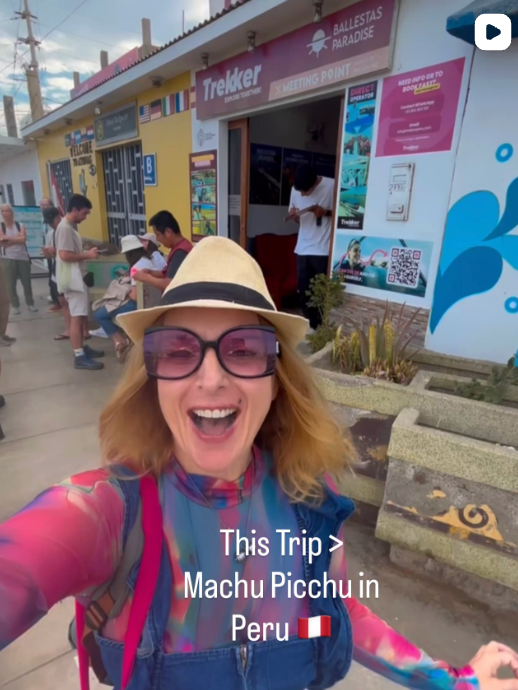
4 Travel to Ballesta Islands aka Peru's Galápagos
From Lima, I traveled by bus about 4 hours to Paracas to visit the Ballestas Islands, often called Peru’s Galápagos. This part of the trip felt extra special because my 2-night stay at Hostal Killamoon in a private room, about $30, was part of a Christmas gift from my brother, sister-in-law, and family.
That made the whole experience even more meaningful — not just another travel stop, but a gift that turned into one of my most magical memories in Peru.

It also felt especially aligned because when I was in Ecuador, I didn’t get to visit the Galápagos this time — partly because of weather, finances, and because a sponsored trip hadn’t aligned yet. So experiencing the Ballestas Islands felt like Peru’s beautiful surprise version of that dream: wildlife, ocean, cliffs, caves, and island energy all in one morning.
While I was there, I arranged an amazing full-day tour through the hostel that included both the Ballestas Islands in the morning and the Paracas National Reserve in the afternoon.
The Ballestas Islands tour was a 2-hour boat ride, and it felt like entering a wild, untouched world. We saw around 7 sea lions, plus what felt like hundreds to thousands of baby sea lions because it was mating season. The energy was loud, alive, raw, and incredible.
We also saw 7 tiny Humboldt penguins — so small and cute — along with majestic caverns, dramatic cliffs, sea birds, rock formations, and ancient-looking hieroglyphs along the way.
It was one of the most surprising and magical wildlife experiences in Peru — and such a reminder that sometimes the thing you thought you “missed” shows up in another form, right on time.
5 Visit Paracas National Reserve Beaches
The Paracas National Reserve was part two of my full-day tour from Paracas, after visiting the Ballestas Islands in the morning. After a wild 2-hour boat ride filled with sea lions, baby sea lions, Humboldt penguins, caverns, and ancient-looking markings, the afternoon shifted into desert-meets-ocean magic.
The reserve felt like another planet — wide-open desert, cliffs, ocean views, colorful beaches, and quiet landscapes that made Peru feel even more expansive.
We started with a stop at La Catedral, one of the most famous viewpoints in the reserve. We stayed there for about 30 minutes, taking in the dramatic cliffs, rock formations, and the power of the Pacific crashing against the coast.
From there, we visited the beaches, including:
Playa Roja — the famous red beach, known for its striking volcanic red sand against the blue ocean. This was such a beautiful photography and content stop.
Playa La Mina — a popular horseshoe-shaped beach protected from the wind, making it one of the best spots for swimming, snorkeling, and relaxing.
Playa El Raspón — one of my favorite stops. The water was calm, clear, and almost like a natural pool. We had about an hour here, which gave me enough time to swim, create content, marvel at the views, and climb the stairs (not for the faint of heart) for those gorgeous overlook moments.
Lagunillas Beach — our final stop, also around an hour, with incredible viewpoints, coastal scenery, and that peaceful end-of-the-day energy.
What I loved most was that the tour didn’t feel rushed. I had time to swim, explore, film, take photos, breathe, and really be present. Paracas National Reserve is one of those places where the desert and ocean meet in the most surreal way — and it reminded me again that Peru is so much more than one iconic destination.
6 Experience Magical Sunsets in Peru
Peru gave me some of the most magical sunsets — from the desert dunes of Huacachina, to the coastal cliffs of Lima, to the volcano views and white-stone beauty of Arequipa.
Huacachina was one of the most unforgettable sunset experiences. I went two days in a row because the desert oasis energy was that magical. Watching the sun drop behind the massive sand dunes, with the lagoon below and golden light everywhere, felt like stepping into another world. Between the buggy rides, sandboarding, and peaceful desert views, Huacachina sunset is a must.
In Lima, the sunsets along the coast were a whole vibe too — especially from Miraflores, Barranco, and the Costa Verde. Coastal walks at golden hour, ocean cliffs, parks, street art, and the Pacific in the background made Lima feel soft, alive, and beautiful.
And then there was Arequipa, where the sunsets felt more peaceful and cinematic. With the white volcanic-stone architecture, historic center, rooftops, plazas, and volcano views, golden hour in the White City felt calm, elegant, and almost sacred. My favorite one in Arequipa was from Las Terrazas at Plaza Armas (they even give you a poncho after the temperatures drop near sunset!))
Peru sunsets are different depending on where you are — desert, coast, or city — but each one reminded me to slow down, look up, and fully receive the beauty right in front of me.

7 Travel to Huacachina for Sunsets and Sandboarding

Huacachina was pure desert magic — a real-life oasis with a lagoon surrounded by massive golden sand dunes, just outside of Ica. It’s one of those places that feels almost unreal, like Peru decided to drop a tiny dreamy village into the middle of the desert.
I traveled from Paracas to Ica by bus, which took about 1–2 hours, and stayed 2 nights in Ica near Huacachina. On my first day, I went to explore the lagoon and dunes for sunset. You pay about 8 soles to enter, and it was absolutely worth it.
The climb up the sand dunes, though? Not for the faint of heart — or for anyone waiting until retirement to travel. It is a workout, a mindset test, and a full-body “am I really doing this?” moment. But once you get to the top, the views of the lagoon, desert, and sunset make every sandy step worth it.
On my second day, I booked a GetYourGuide experience with Guia2Peru for the dune buggy and sandboarding adventure. The buggy ride was an adrenaline rush — about 12 of us bouncing around the dunes while the driver flew over the sand like we were on a desert rollercoaster.
Then came sandboarding. We got to do it three times, lying on our bellies and sliding down the dunes. I loved it. My inner child was very, very happy.
And because obviously I needed a sunset moment, I brought my dress in my bag and pulled it over my clothes at the end for photos in the dunes. It was the perfect way to close out my last day in Ica before leaving the next day for Arequipa — adventure, beauty, adrenaline, golden light, and a little desert goddess energy.
8 Explore Arequipa, the White City
Arequipa felt like one of Peru’s most beautiful surprises — elegant, peaceful, historic, and full of golden light. Known as Peru’s White City, Arequipa is famous for its stunning white volcanic-stone architecture, especially around the Plaza de Armas and the Historic Center. I almost didn't go.
The Plaza de Armas quickly became one of my favorite places to walk around, sit, people-watch, and take in the beauty of the city. I took a tour of the Arequipa Cathedral, which gave me a deeper look at the history, architecture, and sacred beauty of one of the city’s most iconic landmarks.
One of the most magical sunset moments was from Las Terrazas, where I sipped on coca tea while watching the sky shift over the White City. Near sunset, they even let you borrow colorful ponchos to keep warm — and yes, they were perfect for photos and videos too. It was cozy, cinematic, and so Peru.

I stayed in Arequipa for 2 weeks in an amazing Airbnb hosted by another Paola — which made me smile because my host in Barranco was also named Paola. My stay was close to Smart Fit, the Historic Center, the market, and Eco Brunch, which became my favorite coworking spot in Arequipa.
I loved walking around the Historic Center, exploring the streets, working from Eco Brunch, visiting the market, and soaking in the slower rhythm of the city. Arequipa has this beautiful mix of colonial history, volcanic landscape, wellness routines, food culture, coworking cafés, and everyday Peruvian life.
One of my favorite local finds was Tino and his family’s stand in the market. They’ve had their stand for 40+ years, serving emoliente, maca, quinoa drinks, and health goods. It felt like one of those places that tells the story of a city through its people — simple, nourishing, rooted, and full of care.
I also went on a free tour at Mundo Alpaca, and met adorable Alpacas with Marisol from Cusco. I got to hold and hug them up close, including Luna and Paloma. It was sweet, local, and such a fun way to connect with Peru’s textile, alpaca, and artisan culture.

Arequipa was more than a pretty city. It was sunsets, coca tea, white-stone streets, colorful ponchos, cathedral history, alpacas, local markets, workouts, cozy coworking at Eco Brunch, and the kind of grounded travel rhythm that makes you feel like you’re really living somewhere, not just passing through.
9 Experience White Water Rafting Adventures
Arequipa wasn’t just sunsets, white-stone streets, markets, and cozy coworking cafés — it also gave me one of my favorite adrenaline adventures in Peru: white water rafting on the Chili River.
The Chili River runs through Arequipa and is surrounded by volcanic landscapes, canyon views, and that wild nature-meets-city energy that makes the White City feel so unique. It is one of the most popular places near Arequipa for rafting because you can experience adventure without traveling far from the city.
I booked a GetYourGuide experience white water rafting adventure with Cusipata Rafting Arequipa, and from the start, their team was super helpful, professional, and made the whole experience feel safe and exciting.
The adventure itself? One of my favorites.
It was pure adrenaline — paddling through the river, bouncing through rapids, laughing, holding on, and getting splashed with ice-cold water again and again. I loved it. It was the kind of experience that wakes up your whole body and makes your inner adventurer very, very happy.
And the best part? It was under $15 on GetYourGuide.
The price: less than $15.
The adventure: priceless.
10 Try Peruvian food: ceviche, causa & more
Peruvian food became such a huge part of my Peru experience — fresh, flavorful, affordable, and full of culture. And yes, even while traveling, I still stay aligned with food: grocery shopping, cooking at home, choosing local meals that feel good, and keeping my Herbalife Nutrition rhythm with me across 95+ countries.
My favorite ceviche in Peru was in Máncora by the sea — fresh fish, lime, onion, spice, and ocean views. Truly hard to beat. I also had amazing ceviche in the Historic Center of Lima, one of my favorites after Máncora. Many local menus were around 15–20 soles, about $5–$6 USD, and usually included a starter, main, and drink — such a great way to eat local on a budget.
I also loved trying maca, especially in the mornings and at night in Barranco and Arequipa. Maca is a Peruvian root often served as a warm, nourishing drink, and it usually cost about 2–3 soles, less than $1 USD. Same with emoliente, another favorite — a warm herbal drink often served at night in Lima and Arequipa. It felt cozy, grounding, and very local.
For mornings, I often loved quinoa with manzana, a warm quinoa and apple drink that felt nourishing, filling, and perfect before walking, working, or exploring. It became one of those simple daily rituals that made Peru feel like home.
In Paracas, I loved carapulcra, a traditional Peruvian dish made with dried potatoes, spices, peanuts, and usually pork or chicken. It was rich, hearty, comforting, and so good after exploring the coast and desert.
And then there was causa, one of my favorite lighter Peruvian dishes. Causa is made with seasoned mashed potato layered with fillings like tuna, chicken, avocado, or vegetables. I usually got it with tuna and avocado, and I asked for no mayo every time. I had it with my friend Peta at the Barranco market, and also at Lima Fresh — such a simple, satisfying meal.
Peruvian food reminded me that travel can be both adventurous and aligned. You can try local dishes, enjoy the culture, stay on budget, and still honor your body, your routines, and your wellness goals.

Top 10 Things to Do in Peru
Is travel to Peru on your bucket list?
Whether you’re into history, nature, food, or culture, this country truly has something for everyone.
Which adventure would you try first?
If you want to create a life of freedom,
you will love my 75+ Tools to Create a Life and Business You Love.
CREATE WITH OUR COMMUNITY
#google #pinterest #youtube #instagram #facebook #twitter #createalifeandbusinessyoulove #LifestyleEntrepreneur #LifestyleBrand #TransformationCoach #createcultivate #experiences #fitlifecreation #katrinajulia #LivePlan #CANVA #KAJABI #WIX #TEACHABLE #CANON #STORY #onlinecourse #howto #travel #content #creator #createcontent #oneday #videography #foodmarket #doubledecker #contentcreation #blogger #presstrips #top10 #peru #macchupicchu #northernperu #surfing #lima #paracas #arequipa
,


Comments